
Growing Resilience Through Community Gardens
How gardens in HealthEd Connect communities support nutrition, learning, and sustainable agriculture
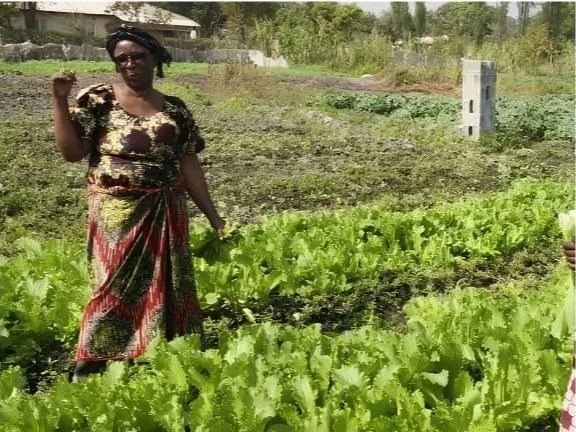
Angela Mbola, a Kafwa leader at Zamtan, harvesting produce to share with clients that they serve and to share with students at the Zamtan Community School of Peace.
As the United Nations Food and Agriculture Organization marks World Food Day 2026 on Friday, October 16, 2026 under the theme “Innovate today. Nourish tomorrow,” we want to highlight the practical, community-led work of our garden programs.
World Food Day offers a timely opportunity to recognize how local innovation is strengthening nutrition, new farming practices, and resilience in HealthEd Connect partner communities. At HealthEd Connect, we recognize that community gardens are more than plots of land. They are classrooms, sources of nutritious food, testing grounds for sustainable practices, and investments in the future.
Community Gardens Bring Crop Diversification
For many of our locations, establishing a community garden is a high priority. These gardens strengthen local communities in several ways:
They provide fresh vegetables for community members receiving support from Community Health Volunteers.
They contribute nutritious produce to school lunches provided by Community Health Volunteers at HealthEd Connect sponsored schools.
They create hands-on learning opportunities, helping families grow small kitchen gardens and add a wider variety of vegetables to their diets as taught by Community Health Volunteers.
They offer space to test new crops and gardening methods suited to local conditions.
By combining food production with education and experimentation, each garden can help a community respond to immediate nutritional needs while building knowledge for the future.
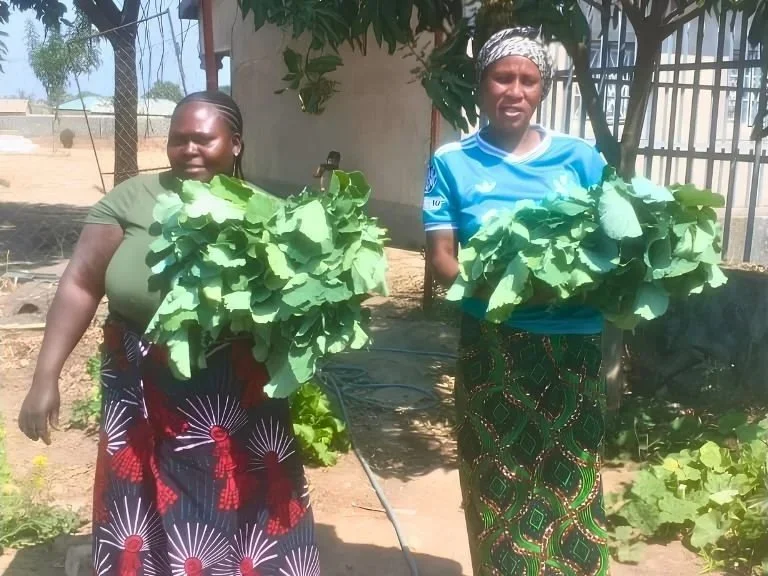
Kafwa leaders share the harvest of vegetables that will be part of the school lunch at Kasompe Community School of Peace.
School Gardens Nourish and Teach in Zambia
Community Health Volunteers in Zambia (the Kafwa) volunteer their time to make school lunches for students who attend HealthEd Connect sponsored community primary schools in the Copperbelt of Zambia. Each school also has a garden. The vegetables grown in the garden at each of the schools are shared as part of the school lunches that are provided; in this way, adding to the nutritional benefit that the school lunches provide for each child who attends. The gardens also help to provide educational opportunities for the students at the school as they learn about gardening practices.
A New Permaculture Experiment in Kazomba, Malawi
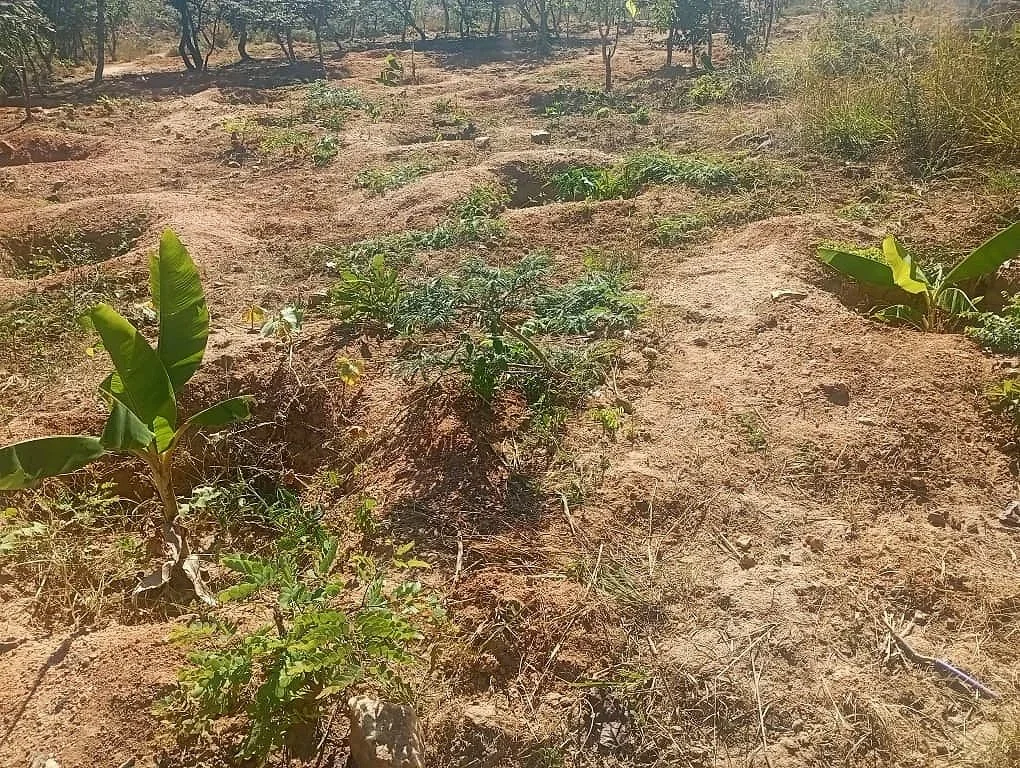
The start of a permaculture garden at the Kazomba Sinkhani Community Center, Malawi. Young fruit trees were planted utilizing deep holes filled with manure as fertilizer to give them a strong start.
At the Kazomba Sinkhani Community Center in Malawi, a promising experiment is underway. After receiving training in permaculture gardening, the Sinkhani coordinator along with local leaders are applying these practices at Kazomba with the hope of expanding permaculture gardens to other centers across Malawi.
Permaculture works with natural ecosystems to protect soil, conserve water, and support biodiversity. In a country where climate change, soil degradation, and food insecurity present serious challenges, this approach can help communities:
Increase yields by growing a diverse mix of crops.
Restore degraded land while improving water conservation.
Build community independence through self-reliant, low-input farming methods.
The emphasis with permaculture gardening practices is to create an environment where crops can provide nutrients for each other in a sustainable way and create crop diversification that will put nutrients back into the ground. This year, the Kazomba Sinkhani Community Center planted banana, mango, papaya, and guava trees using this new method of planting. Once the trees develop strong root systems, the team plans to plant beans, leafy greens, tomatoes, and other vegetables nearby, creating a diverse garden that nurtures both people and the land.
Sinkhani volunteers also use the garden to provide nutrition education and share fresh produce with women and children, helping families prepare more nutritious meals. As they continue to grow in understanding, they are looking forward to including instruction in the new permaculture gardening practices. By introducing these permaculture practices to the wider community, they hope to encourage sustainable gardening throughout the area.
Nourishing Tomorrow, Starting Today
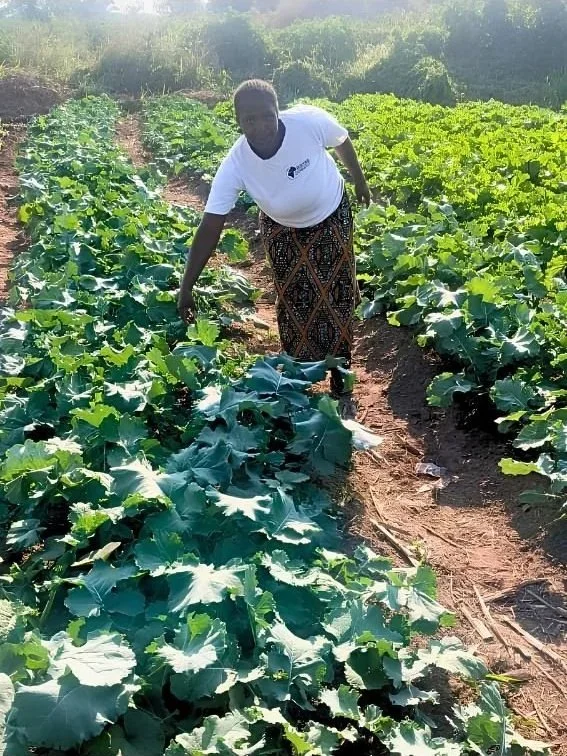
Fanny Labunda, a Kafwa volunteer in Luapula, Zambia, shows off their abundant garden. They share the produce with clients that they support as they visit their homes.
For HealthEd Connect’s site partners, planting gardens is an opportunity to grow nutritious food and to provide educational opportunities as well. The community gardens provide food for school children along with community members supported by the volunteers. They also allow for opportunities to experiment with new approaches to gardening that can inspire the community to not only have their own gardens, but to try innovative practices as well.
On World Food Day, the garden at Kazomba reminds us that innovation does not always begin with complex technology. Sometimes, it begins with shared knowledge, carefully planted trees and plants, and a community willing to try something new.
Give today to support these and other community-based programs empowering women and children through evidence-based health, education and advocacy. Go to www.healthedconnect.org/donate.