We're Bursting with Pride!
Zambia-Congo-baby-101.jpg
2019-20000-babies.jpg

A local hospital in Lee's Summit, Missouri recently posted this celebratory sign:

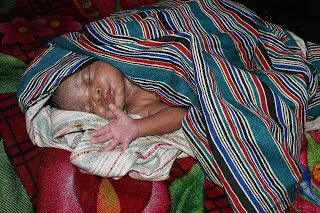
But we think our Wasaidizi health workers in the Democratic Republic of Congo can go one better. A small but mighty cadre of seven volunteer Traditional Birth Attendants (TBAs), has delivered more than 11,468 baabies in the last six years. No shiny hospital delivery rooms, no back-up surgery suites, no electricity, no running water. And yet these amazing TBAs come out in the middle of the night to safely deliver hundreds of babies. Living in a country with one of the highest maternal death rates in the world, these women defy the odds and totally change the grim statistics in their part of the world.

They may not have a billboard announcing their accomplishments, but we think they're incredible!! And so do countless mothers and babies.

Emily Penrose-McLaughlin
Securing the Future
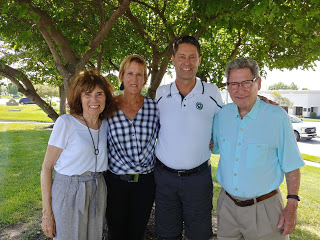
Sherri, Jeannette, Ken, and Jac

Sherri, Jeannette, Ken, and Jac

HealthEd Connect is celebrating the receipt of an empowering Trust gift while paying tribute to the energetic and far-sighted woman who arranged for this generous gift: Joan Scribner. Joan loved nursing and spent her life working toward the future by enabling the dreams of young people who wanted to pursue a nursing career.

In the 70s she helped establish a Professional Nurses Scholarship Endowment that, since then, has literally changed the lives of dozens of young people. The Endowment, now managed by HealthEd Connect, has provided a total of $48,650 in awards to 24 students in 8 countries including India, Nepal, Zambia, Malawi, Philippines, Honduras, Nicaragua and the U.S.A.

This month, Joan's son Ken Scribner, and his wife, Jeannette, presented a check from Joan's Trust as one of her final wishes. We salute Joan's lasting legacy to make the world healthier by empowering nurses of tomorrow.

Emily Penrose-McLaughlin
International Day of Girl Child
You Go Girls!!

You Go Girls!!

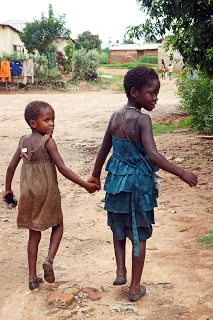
Here's to the strong girls every where, who courageously walk hand in hand in the role assigned them by society while dreaming BIG dreams for tomorrow. The world is making slow but steady headway on leveling the playing field for girls. But there's still a long way to go.

“When girls are educated, empowered, healthy and free from violence and discrimination, their communities are more prosperous and stable. Investing in gender equality is not just the right thing to do – it’s the smart thing to do. But girls around the world still face lifelong gender-based inequalities that begin in childhood.”
- Save the Children

Emily Penrose-McLaughlin
Immune-Amnesia
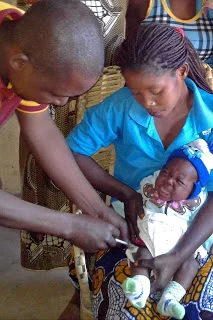
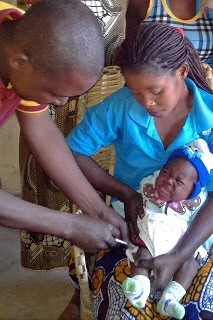
Jane holding baby while clinic worker gives immunization

Jane holding baby while clinic worker gives immunization

HealthEd Connect actively supports the health workers in Malawi, Zambia, and DRC who are diligently working to encourage moms to have their babies immunized. They've made great strides in overcoming fears and superstitions and in the last 6 months alone worked with the government clinics to immunize 11011 babies. Great job!!

While the developing world is making great strides, the U.S. seems to be going backwards.

An article by Nurith Aizenma in the Sept. 5 issue of Goats and Soda had the following sobering report:

There's mounting evidence that when a person is infected with measles, the virus also wipes out the immune system's memory of how to fight off all sorts of other life-threatening infections – ranging from gastro-intestinal bugs that cause diarrhea to respiratory viruses that trigger pneumonia.

"All of the sudden you end up having not just more outbreaks of measles, but you might have more outbreaks of rubella or flu or any number of other diseases," says Dr. Michael Mina, a Harvard professor who has authored some of the most ground-breaking research into this so-called "immune-amnesia" effect from measles.

Emily Penrose-McLaughlin
Poverty and Water
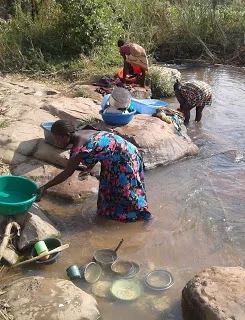
Washing dishes in stagnant water

Washing dishes in stagnant water

One of our health workers in Luapula, Zambia, recently sent this picture of a client she was visiting who has been ill. When she arrived at the visit, she found the mother, knee deep in a stagnant pool of water, washing her dishes in the cloudy water. It is no mystery why people constantly fight illnesses caused by unsafe water.

According to The Water Project, nearly one billion people do not have access to clean, safe water. If you do the numbers, that means about 1 in 8 people in our world are affected. For women, this is particularly daunting as they try to safeguard the health of their family and carry out the duties of everyday living.

This is a problem that cannot be solved over night but is, without question, solvable!! We just need to work together address the problem one community at a time.

Emily Penrose-McLaughlin
Adult Literacy
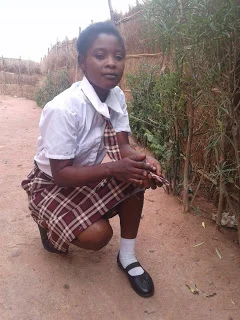
Jane in school uniform

Jane in school uniform

Jane [the one who had the severe toothache reported on in last blog] is now recovered and back to school. At the completion of this school term in December, she plans to enroll in the 12th grade in January to finish her high school diploma. She is hoping to simultaneously enroll in the first year of a nursing program while completing grade 12! Fortunately, HealthEd Connect has nursing scholarships that allow dreams like Jane's to come true.

While pursuing school, Jane has responsibilities as a single parent of two young daughters, supervises an active Kafwa program that monitors babies, organizes programs for orphans, conducts regular home care visits, and teaches unschooled children the basics of literacy. Whew! Wonder what she does in her spare time?

Emily Penrose-McLaughlin
Even Caregivers need Care
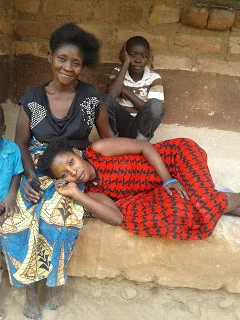
Justine comforting Jane (red dress)

Justine comforting Jane (red dress)

Jane, the amazing Kafwa supervisor in the rural area of Luapula, Zambia, reported last week she was suffering from a toothache so severe it prevented her from going about her usual activities. She was unable to eat, felt dizzy when she stood up, and was in constant pain. The caregiver was in need of care herself! Her sister, Justine, finally came to care for her until she recovered.

The question many would ask is "why doesn't she go to a dentist?" Good question. The answer, however, is not so simple. First of all, there are no dentists in the rural area where she lives. She has to travel a long distance to visit one. Second, the money required to visit a dentist is prohibitive for most people in Jane's area. As a health worker, Jane is fortunate to have HealthEd Connect emergency funds available for situations such as hers but she still needs to travel to acquire the care. She assures us she is in the process of making arrangements to visit a dentist this week.

In the meantime, she asked for suggestions on things she could do to alleviate the pain. I told her nothing would permanently relieve the pain until she visited a dentist to have the problem fixed. There are, however, some effective traditional remedies I suggested she try (see below).

  • Add 1/2 teaspoon salt to a glass of water and swish it in your mouth several times a day. This will help cleanse the tooth, reduce inflammation, and loosen food that might have gotten stuck.

  • Chew on guava leaves and then spit them out or make a tea with guava leaves and swish it in your mouth. If there's an infection, the guava leaves will help fight the infection since it fights microbes.

  • Pound a piece of garlic into a paste and apply it to the tooth that is aching. The garlic helps reduce inflammation, relieves pain, and fights microbes.

    She replied the guava leaves were the most effective. For those of you interested in traditional medicine, Google guava leaf effectiveness and you will find a number of research studies being conducted at various universities demonstrating the antibacterial properties of guava.

Emily Penrose-McLaughlin
Life Threatening Smoke
Cooking stove smoke

Cooking stove smoke

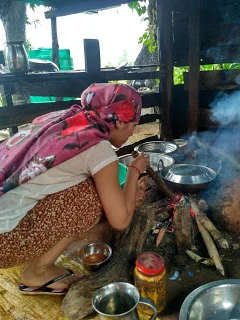
The smoke from cooking stoves in rural Nepal areas continues to cause untold respiratory disease and distress. The village woman pictured above is in an outdoor area that is ventilated but in the winter time, most women cook inside their homes where smoke accumulates and becomes a major health hazard.

Cooking smoke is the next big issue we're planning to tackle in Nepal. Pinkey, the Nepali supervisor, and Sangeeta, one of our volunteers and a professional nurse, are working together to identify acceptable alternatives that vent the smoke. Stay tuned for updates!

Emily Penrose-McLaughlin