Even Caregivers need Care
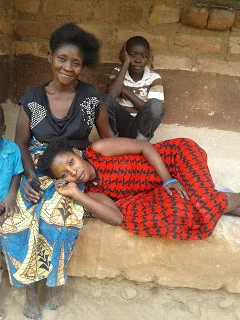
Justine comforting Jane (red dress)

Justine comforting Jane (red dress)

Jane, the amazing Kafwa supervisor in the rural area of Luapula, Zambia, reported last week she was suffering from a toothache so severe it prevented her from going about her usual activities. She was unable to eat, felt dizzy when she stood up, and was in constant pain. The caregiver was in need of care herself! Her sister, Justine, finally came to care for her until she recovered.

The question many would ask is "why doesn't she go to a dentist?" Good question. The answer, however, is not so simple. First of all, there are no dentists in the rural area where she lives. She has to travel a long distance to visit one. Second, the money required to visit a dentist is prohibitive for most people in Jane's area. As a health worker, Jane is fortunate to have HealthEd Connect emergency funds available for situations such as hers but she still needs to travel to acquire the care. She assures us she is in the process of making arrangements to visit a dentist this week.

In the meantime, she asked for suggestions on things she could do to alleviate the pain. I told her nothing would permanently relieve the pain until she visited a dentist to have the problem fixed. There are, however, some effective traditional remedies I suggested she try (see below).

  • Add 1/2 teaspoon salt to a glass of water and swish it in your mouth several times a day. This will help cleanse the tooth, reduce inflammation, and loosen food that might have gotten stuck.

  • Chew on guava leaves and then spit them out or make a tea with guava leaves and swish it in your mouth. If there's an infection, the guava leaves will help fight the infection since it fights microbes.

  • Pound a piece of garlic into a paste and apply it to the tooth that is aching. The garlic helps reduce inflammation, relieves pain, and fights microbes.

    She replied the guava leaves were the most effective. For those of you interested in traditional medicine, Google guava leaf effectiveness and you will find a number of research studies being conducted at various universities demonstrating the antibacterial properties of guava.
Emily Penrose-McLaughlin
Life Threatening Smoke
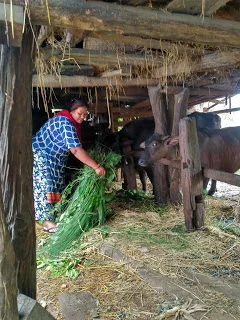
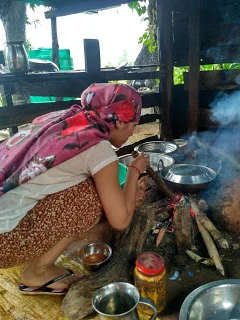
Cooking stove smoke

Cooking stove smoke

The smoke from cooking stoves in rural Nepal areas continues to cause untold respiratory disease and distress. The village woman pictured above is in an outdoor area that is ventilated but in the winter time, most women cook inside their homes where smoke accumulates and becomes a major health hazard.

Cooking smoke is the next big issue we're planning to tackle in Nepal. Pinkey, the Nepali supervisor, and Sangeeta, one of our volunteers and a professional nurse, are working together to identify acceptable alternatives that vent the smoke. Stay tuned for updates!

Emily Penrose-McLaughlin
A Woman's Monthly Challenge
Animal shelter in rural Nepal

Animal shelter in rural Nepal

When Pinkey visited Arunkhola, Nawalparasi District in Nepal last month she encountered an ongoing problem that even today is common in the rural areas. Many women are relegated to staying with the animals or in small outdoor sheds during their menstrual period. Those who do not encounter these isolating circumstances still face hardships since the lack of sanitary supplies forces them to miss school and other activities during their monthly period.

Pinkey took advantage of being in Arunkhola to teach the women how to make sanitary supplies with moisture proof backing and fabrics that can be reused. Pinkey's teaching has caught on everywhere with women eager to gain more control over their lives with simple supplies they can make for themselves.

Pinkey teaching women to make sanitary pads

Pinkey teaching women to make sanitary pads

Emily Penrose-McLaughlin
Usha in Morning
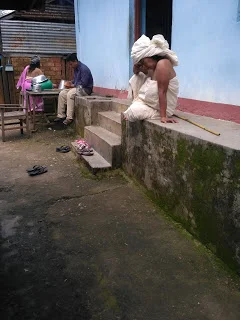
Usha in mourning clothes

Usha in mourning clothes

Pinkey, the Nepali health worker supervisor, made a long trip last week to visit the various project sites. When she visited Arunkhola, Nawalparasi District to meet the volunteers there, she reported the following:

"I came to know that our volunteer Usha Sen's Husband passed away, I joined funeral activities there. In Hindu religion its a long process,widow or wife will stay at one specific area and for 13 days they don't touch others, they eat once time a day by prepare rice at place which is away from house, or around people where people cant see while she is eating, they don't eat salt for 13 days and also other siblings,family member don't eat salt also.They use different materials utensil and spon by wood. They wear white cloths."

The whole HealthEd Connect team joins Pinkey in sending sincere condolences to Usha in her time of sorrow.

Emily Penrose-McLaughlin
Teacher Testimony
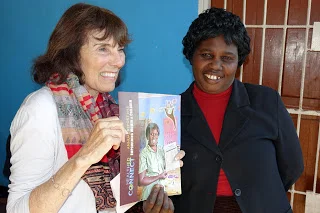
Sherri (L.) showing Agnes her picture on cover of Annual Report

Sherri (L.) showing Agnes her picture on cover of Annual Report

A touching testimony from Agnes Mwansa, the Reception (Kindergarten) teacher at the Mapalo Young Peace Maker School in Ndola, Zambia. We are so proud to have Agnes at our school!

“I'm one of the living testimony of HealthEd Connect. I passed through a difficult and terrible situation after the company l was working for collapsed. My first husband had died. I tried this and that nothing worked out, so l was poverty stricken with my children for many years. I was only left with a small sewing machine which l used to carry from door to door making clothes and l could only manage for just a meal after two or three days. I was so weak, hopeless, depressed, confused, desperate and so forth from 1999 to 2012.

I joined Young Peace Makers Community School in 2012 as nursery teacher from hence forth things started changing. Now l am managing to take my children to school. In the process of suffering my children did not complete school. For the first time in life my two children have gone up to G12. Because of HealthEd Connect support l am a professional teacher. My life has been lifted up physically, spiritually, emotionally and socially.

Thank you HealthEd Connect for you support. I wish you long life.”

- Agnes Mwansa

Keep Smiling!
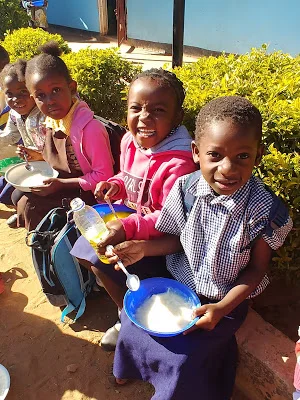
2019 eating porridge.jpg

A huge thank you to all of our loyal Amazon shoppers! You've raised $1,153.45, to date, just by smiling at HealthEd Connect when you shopped at Amazon. Some people say there's no such thing as a free lunch but we disagree! Your shopping has provided 9,612 lunches for Zambian kids that frequently rely on the school lunch as their sole food that day. Keep smiling and keep shopping!

 
PrimeDayLeadupAssetsPrimeDayLeadUP_728x90._CB442607434_.png
 
Nurses Rock
Vinjeru ready for clinical

Vinjeru ready for clinical

HealthEd Connect provides annual nursing scholarships for up to $2,000 per student. One of the 2019 recipients, Vinjeru Banda, is a 2nd year student in a BSN program in Malawi. Vinjeru is touched by the many health needs in her country and wants to become a nurse to help alleviate some of the suffering.

Scholarships are available for students in the U.S.A. as well as developing countries. Application deadlines are September 15 of each year. If you know of someone who might be interested, please send an email to skirkpatrick@healthedconnect.org

Resilient Little Survivors
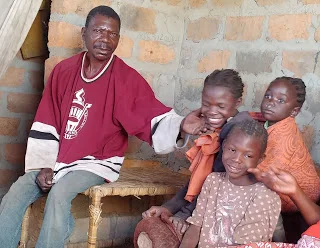
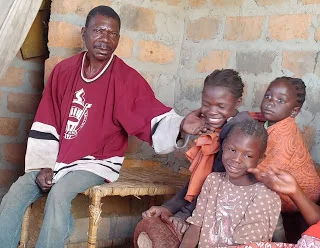
Sara and Mercy with their Dad

Sara and Mercy with their Dad

We were excited to again see the twins, Mercy and Sara, with their Dad when we visited their home in Kasompe, Zambia, last week. Mercy was baby-sitting a neighbor child (far right), that weighed almost as much as she did, that she carried on her back.

The twins' mother died when they were 3 months old leaving the father with two tiny babies as well as 7 older children. When our amazing kafwa found out about the twins and the desperate situation their father faced, they sprang into action providing modest clothing and food. Knowing there was no electricity for a refrigerator, no baby bottles for feeding much less a way to sterilize them, and no money to purchase expensive formula, I innocently asked the kafwa what they fed the babies to keep them alive. They looked at me like I'd just landed from Mars! When they recovered from hearing such a dumb question, they said, "Nshima [corn meal] porridge, of course. We just made it thin and spooned it into their little mouths."

When the girls were old enough for school, the kafwa made sure they were enrolled in the Kasompe Community School of Peace even though they had to walk a long distance to and from classes everyday. The girls are now 13 and handle all of the family's food preparations from buying at little shanty kiosks to cooking it for themselves, their father, and 3 older brothers who still live at home. Quite a responsibility for such young girls.